
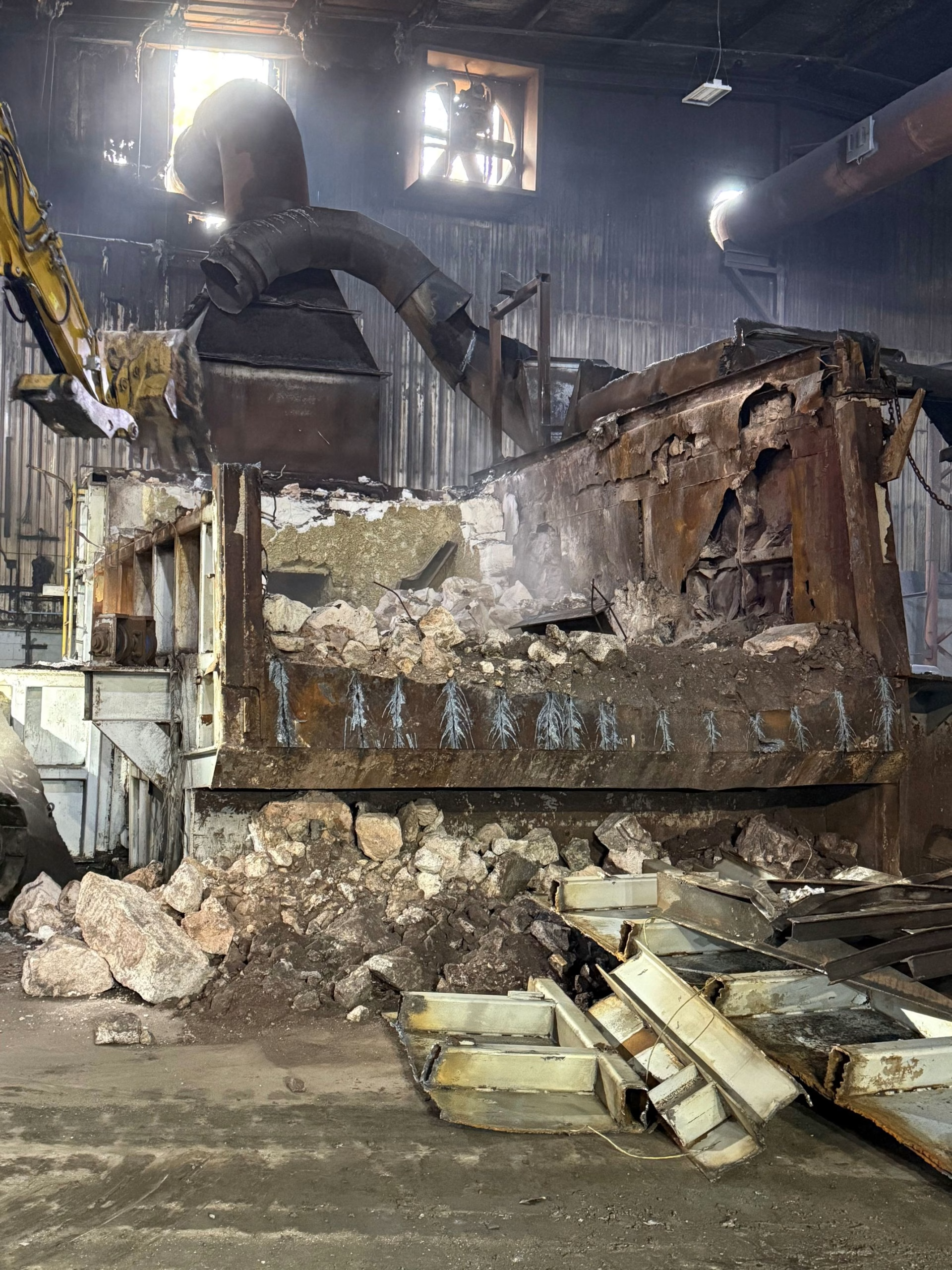
Big furnaces are built to take the heat. Taking them apart is another story.
When you look at a massive industrial furnace, the first thing you notice is the steel. The size. The weight. The sheer amount of equipment it takes to bring something like that down.
But some of the biggest challenges in industrial furnace removal aren’t necessarily what you can see from the outside.
They’re what’s inside.
Industrial furnaces can contain layers of refractory materials, insulation, specialized linings, and residues left behind from years of operation. Depending on the furnace’s age, construction, and industrial application, those materials can introduce environmental and disposal considerations that go well beyond ordinary demolition.
And in certain situations, that can even include naturally occurring radioactive material.
What Is Refractory Material?
Refractory materials are designed to withstand extremely high temperatures. They’re used to line industrial furnaces, kilns, boilers, incinerators, and other equipment exposed to intense heat.
These materials protect the surrounding structure and help industrial equipment operate under demanding conditions.
Refractory linings can include firebrick, castable refractory, ceramic materials, and specialized mineral-based products.
They’re tough, dense, and built to last.
But once a furnace reaches the end of its useful life, those same materials become part of the demolition and waste-management challenge.
And not all refractory materials can be handled or disposed of the same way.
Wait. Can Furnace Linings Be Radioactive?
Yes, certain refractory materials can contain naturally occurring radioactive elements.
That doesn’t mean every furnace is radioactive, or that all refractory material is dangerous.
Some minerals used in refractory manufacturing naturally contain trace amounts of uranium, thorium, and other radioactive elements.
One example is zircon, a mineral used in certain high-temperature refractory applications. Because zircon can contain naturally occurring radioactive material, its presence may warrant evaluation Naurally Occurring Radioactive Material depending on its composition, quantity, and intended handling.
These materials are often discussed in terms of NORM.
Industrial processing can sometimes concentrate naturally occurring radionuclides or increase the potential for exposure. When that happens, the material may be classified as TENORM (Technologically Enhanced Naturally Occurring Radioactive Material).
The important distinction is that the presence of naturally occurring radioactivity doesn’t automatically mean a material presents a significant radiation hazard or requires special disposal.
That determination depends on the actual material, its radiological characteristics, applicable regulations, and potential exposure.
The Furnace’s History Matters
Two industrial furnaces might look nearly identical from the outside but present very different challenges when it’s time for removal.
A furnace used in metal processing may have different linings, deposits, and contamination concerns than one used in glass manufacturing or another high-temperature industrial application.
Years of operation can also leave behind residues or introduce contaminants into refractory materials.
Depending on the process, potential concerns may include:
Asbestos-containing insulation or other regulated materials
Refractory dust containing respirable crystalline silica
Heavy metals and process-related contamination
Potentially hazardous furnace residues
Naturally occurring radioactive materials in certain refractory components or deposits
That’s why understanding a furnace’s construction and operating history is so important.
A material that looks like ordinary brick or rubble may require testing or special handling before it can be transported, recycled, or disposed of.
Why Disposal Deserves Just as Much Attention as Demolition
Getting a giant furnace out of a building is impressive.
Knowing what to do with everything that comes out is just as important.
Industrial furnace demolition can generate substantial amounts of steel, refractory brick, insulation, concrete, and process residues.
Some materials may be suitable for recycling or recovery. Others may require additional characterization, segregation, or disposal at an appropriately authorized facility.
Refractory materials are particularly important to evaluate because their composition and history can affect where they’re allowed to go.
When potentially radioactive material is suspected, qualified specialists may need to conduct radiological surveys or testing to determine whether additional controls or disposal requirements apply.
Simply treating every component as ordinary construction debris isn’t an acceptable substitute for proper evaluation.
And that’s where industrial demolition and environmental expertise need to work together.
There’s More to Industrial Furnace Removal Than Big Iron
At Melching, we know the heavy equipment gets the attention. And when you’re removing a massive industrial furnace, there’s certainly plenty of heavy lifting involved.
But successful industrial equipment removal takes more than horsepower.
It takes experienced crews, an understanding of complex industrial environments, careful coordination, and the ability to recognize when environmental concerns need additional attention.
From selective demolition and equipment removal to environmental remediation, salvage, scrap recovery, and site preparation, Melching brings multiple capabilities together to tackle complicated industrial projects.
Because sometimes the hardest part of demolition isn’t taking something down.
It’s knowing exactly what you’re dealing with before you do.
Got a Furnace—or Something Else Massive—that Needs to Go?
Whether you’re decommissioning an industrial furnace, removing obsolete production equipment, or clearing an entire facility, Melching has the experience, crews, and equipment to take on the heavy stuff.
Big equipment. Complex sites. Environmental challenges.
That’s our kind of work.

