Work happening in your building?
First, do not panic. Also, do not “just squeeze through real quick.”
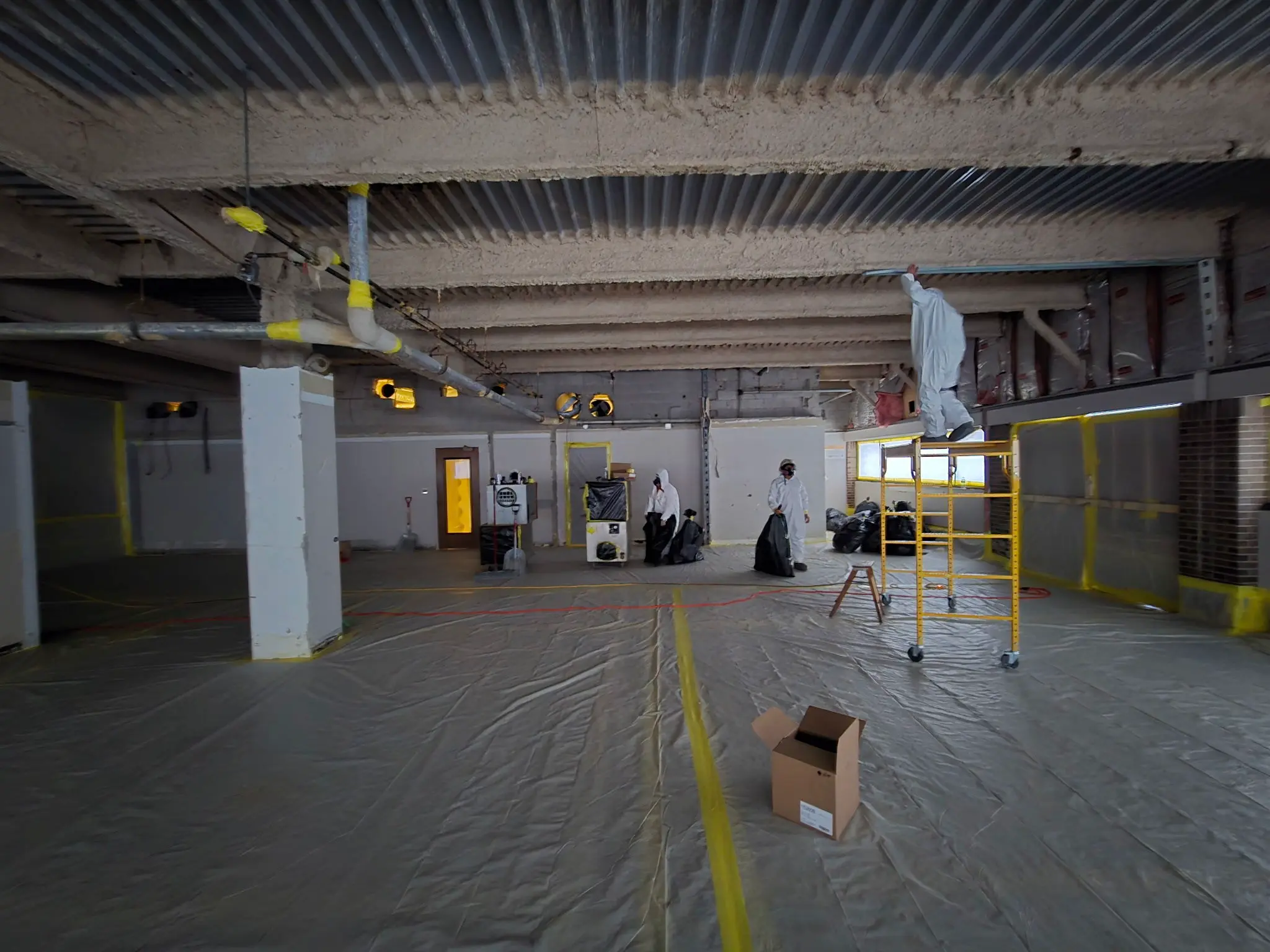
When demolition, abatement, renovation, utility work, or other construction activity happens inside an occupied building, the goal is to keep the work controlled while the rest of the building continues to function.
That means employees may still be working nearby. Visitors may still be coming in. Tenants may still need access. Facility teams may still be responding to daily building needs. Vendors may still be making deliveries. Production may still be running.
In other words, life does not stop just because work is happening behind a barrier.
That is why communication matters.
The project team is responsible for setting up and performing the work safely. Building occupants help by respecting the work zone, following posted instructions, using approved routes, and not disturbing anything connected to the project.
Here is what occupants should know before work begins in an occupied building.
1. If an Area Is Restricted, It Is Not a Shortcut
We know. The closed hallway may be the fastest way to the break room.
But if an area is blocked, sealed, posted, or marked as restricted, do not enter it.
Restricted areas are set up to keep people separated from the work and to keep the project controlled. Even if no one is actively working inside at that moment, the area may still need to remain closed.
So if you see barriers, signs, caution tape, temporary walls, sealed doors, cones, or containment, treat that area as off-limits until the project team says otherwise.
Simple rule: if it looks closed, do not make it a shortcut.
2. Do Not Touch the Barriers, Signs, Machines, or Hoses
The items around a work zone are not decorations.
They are part of the safety setup.
That may include plastic sheeting, temporary walls, warning signs, cones, hoses, machines, floor protection, sealed materials, waste containers, cords, or controlled entry areas.
Please do not move, unplug, open, adjust, lean on, or store anything against them.
For example:
Do not move a sign because it is in the way
Do not unplug equipment to charge your phone or use the outlet
Do not open a barrier to see what is happening
Do not move hoses, cords, cones, or floor protection
Do not stack boxes, carts, or supplies against containment
Even a small change can interfere with how the work area is controlled.
If something looks wrong, report it. Do not try to fix it yourself.
3. Your Coffee Matters. Just Not Inside the Work Zone.
Food and drinks should stay away from active work areas.
That means no coffee cups on temporary barriers. No lunch bags near containment. No water bottles sitting beside equipment. No snacks stored next to posted areas.
This also applies to personal items like coats, purses, backpacks, paperwork, tools, and supplies.
Keep these items away from restricted areas, waste routes, and work zone entrances.
Good examples:
Eat lunch in the break room, not near the work area
Keep coffee and water bottles away from barriers and equipment
Do not leave bags, coats, or supplies near posted zones
Do not roll food carts or personal items through restricted routes
Do not use a work zone entrance as a drop-off spot
Keeping the area clear helps the project team maintain a clean, controlled site.
4. Do Not Disturb Building Materials Near the Work Area
Building materials are not always as simple as they look.
Something may look like ordinary floor tile, pipe insulation, ceiling material, caulk, adhesive, wall material, coating, or ductwork. But depending on the building and the scope of work, it may need to be protected, tested, removed carefully, or left undisturbed.
That is why employees and other building occupants should avoid disturbing materials near the work area.
Do not drill, cut, scrape, sand, remove, open, pull apart, or sweep up materials unless the project team has clearly approved it.
Everyday examples:
Do not remove ceiling tiles to check above the ceiling
Do not drill into a wall to hang something near the work zone
Do not pull up loose flooring
Do not move old pipe insulation
Do not scrape or pick at damaged material
Do not sweep up unknown debris yourself
If something looks loose, dusty, damaged, wet, cracked, or out of place, report it.
5. Use the Approved Routes, Even If They Are Annoying
During work in an occupied building, normal routes may change.
A hallway may close. A stairwell may be restricted. A loading area may shift. A doorway may be sealed. The “usual way” may not be available for a while.
That can be inconvenient, but approved routes are there for a reason.
They help keep employees, vendors, visitors, and tenants separated from the work area. They also help crews move materials and equipment safely.
Do not move barriers, open closed doors, step around signs, or cut through the work zone because it seems faster.
The long way may be annoying. It is also the safe way.
6. Report Concerns Instead of Fixing Them Yourself
If you see something that does not look right, say something.
But please do not try to be the hero with a roll of tape and a broom.
Report concerns like:
Dust outside the work area
A barrier that looks open or damaged
A warning sign that has fallen or moved
A door that should be closed but is open
Debris near an occupied area
Someone entering a restricted space
A machine, hose, cord, or cone that appears disturbed
Water, odor, noise, or vibration that seems unusual
The safest response is to notify the designated site contact, facility manager, supervisor, or project representative.
That way, the project team can inspect the issue and respond the right way.
7. “No One Is Working Right Now” Does Not Mean “Go Ahead”
Sometimes a work area may look quiet.
Crews may be on break. Work may be paused between phases. The area may be waiting for cleaning, inspection, air monitoring, utility confirmation, or clearance. Barriers may need to stay in place overnight or over a weekend.
Do not enter just because you do not see workers inside.
If signs, barriers, or containment are still in place, the area is still restricted until the project team says otherwise.
8. Coordinate Other Work Before Getting Close to the Area
In an occupied building, daily work still has to happen.
Maintenance may need access to equipment. Cleaning crews may be working after hours. IT may need to run cables. Vendors may be making deliveries. Other contractors may be working nearby. Facility teams may need to respond to unexpected building issues.
That work should be coordinated before anyone gets close to the active work area.
Examples:
Do not send a cleaning crew into a restricted hallway
Do not schedule maintenance above or next to containment without checking first
Do not make deliveries through a closed route
Do not open ceiling tiles near the work area
Do not move stored materials into or around the work zone
Do not send vendors to a loading area that has been temporarily rerouted
A quick check with the project team or facility contact can prevent confusion and help keep everyone safer.
9. Pay Attention to Updates From HR, EHS, or the Facility Team
Work in an occupied building requires communication.
The work area may change as the project moves forward. A hallway may reopen. A new room may close. A noisy task may be scheduled after hours. A route may shift. A certain area may be restricted for a short time and then released.
Pay attention to updates from HR, EHS, your supervisor, building management, the facility team, or the project team.
These updates are there to help everyone understand what is happening, where to go, what to avoid, and who to contact with questions.
10. The Main Rule: Respect the Work Zone
If work is happening in your building, the safest approach is simple:
Stay out of restricted areas.
Do not take shortcuts through the work zone.
Do not disturb building materials.
Do not touch barriers, signs, equipment, hoses, or machines.
Keep food, drinks, and personal items away from the area.
Use approved routes.
Report concerns instead of fixing them yourself.
Follow updates from the project team.
When everyone respects the work zone, the crew can do its job safely and the rest of the building can remain better protected.
Why This Matters in Occupied Buildings
Work inside an occupied building is different from work on an empty site.
There are more people to protect, more access points to manage, more schedules to coordinate, and more opportunities for confusion.
A simple reminder can prevent a real problem.
Do not enter restricted areas. Do not touch the setup. Do not bring coffee into the work zone. Do not sweep up unknown debris. Do not assume a quiet area is open.
These may seem like small things, but small things help keep a controlled project controlled.
How Melching Helps Keep Occupied Buildings Safer During Demolition, Abatement, and Remediation
At Melching Demolition, we know work in an occupied building is about more than what happens behind the barrier.
It is also about the people still using the building every day.
That is why we focus on planning, containment, access control, communication, waste handling, and daily site awareness. Our team works with owners, facility teams, HR, EHS, contractors, and project managers to help keep demolition, abatement, and remediation work controlled around active operations.
Since 1992, Melching Demolition has been making way for progress through safe, responsible demolition and environmental remediation across Michigan, Ohio, and Indiana.
We specialize in high-risk, contaminated, and complex sites, managing every phase of work in-house with certified crews and a culture built on safety, trust, and results.


